How to Master Health News in 17 Days: A Complete Guide to Medical Literacy
In an era of viral TikTok health trends, conflicting dietary advice, and sensationalist headlines, the ability to navigate health news isn’t just a skill—it’s a necessity for your well-being. Misinformation can lead to unnecessary anxiety, wasted money on “miracle” supplements, or, in the worst cases, dangerous medical decisions. But how do you separate the breakthrough science from the clickbait?
The good news is that you don’t need a medical degree to understand health news. You need a system. This 17-day intensive program is designed to transform you from a passive consumer into a critical thinker, capable of decoding complex medical research and identifying credible sources with ease.
Phase 1: Building Your Foundation (Days 1–5)
The first five days focus on cleaning up your information environment and understanding where health news actually comes from. Most people consume news through social media algorithms, which prioritize engagement over accuracy. We are going to change that.
Day 1: The Digital Audit
Audit your current health news intake. Unfollow accounts that use sensationalist language (“The secret doctors won’t tell you!”) or sell proprietary supplements. Replace them with institutional accounts like the Mayo Clinic, the Cleveland Clinic, and the National Institutes of Health (NIH).
Day 2: Identify Tier 1 Sources
Learn the difference between “primary” and “secondary” sources. A primary source is the original study published in a medical journal (like The Lancet or JAMA). A secondary source is a news outlet reporting on that study. Your goal is to always look for the link to the original study.
Day 3: Set Up a Specialized Feed
Use tools like Google News Alerts or RSS readers to follow specific medical topics. Use keywords like “clinical trials,” “peer-reviewed,” and “epidemiology” to ensure you are getting science-based updates rather than lifestyle blog posts.
Day 4: Understand the Headline Trap
Headlines are written by editors, not scientists. They are designed to grab attention. Practice reading a health headline and then predicting what the study actually found. You’ll soon notice that “Coffee Prevents Cancer” usually means “One Compound in Coffee Inhibited Cancer Cells in a Petri Dish.”
Day 5: The Hierarchy of Evidence
Not all studies are equal. Learn the “Pyramid of Evidence.” At the bottom are animal studies and case reports (interesting but not definitive). In the middle are observational studies. At the top are Randomized Controlled Trials (RCTs) and Meta-Analyses. If a news story is based on a study of ten mice, take it with a grain of salt.
Phase 2: Decoding the Data (Days 6–10)
Now that you have your sources, it’s time to understand the language of science. This phase demystifies the jargon that often scares people away from reading original research.
Day 6: Absolute vs. Relative Risk
This is the most common way health news misleads the public. A headline might say, “Eating Bacon Increases Cancer Risk by 20%.” That is relative risk. If the absolute risk of that cancer is 1 in 100, a 20% increase makes it 1.2 in 100. The danger is much smaller than the headline suggests.
Day 7: Sample Sizes and Diversity
Look at the “N” number. A study with 20 participants is a pilot study; it’s not a rule for the general population. Furthermore, check if the sample was diverse. A study performed only on college-aged men may not apply to post-menopausal women.
Day 8: Correlation vs. Causation
This is the golden rule of health literacy. Just because two things happen together doesn’t mean one caused the other. For example, people who carry lighters are more likely to get lung cancer. Lighters don’t cause cancer; smoking does. Always ask: “Is there a third factor at play?”
Day 9: The Power of Peer Review
Learn what “peer-reviewed” actually means. It means other experts in the field checked the methodology before publication. Beware of “pre-prints,” which are studies released before this check has happened. They were common during the pandemic but often contained errors.
Day 10: Funding and Conflicts of Interest
Always scroll to the bottom of a study to look at the “Conflicts of Interest” section. If a study saying “Dark Chocolate is a Superfood” was funded by a major candy corporation, you should be skeptical of the conclusions.
Phase 3: The Red Flag System (Days 11–14)
By day 11, you are more informed than 90% of the public. Now, we refine your “nonsense detector” to spot red flags instantly.
Day 11: Sensationalist Language
Watch out for words like “miracle,” “cure,” “breakthrough,” and “secret.” Science is incremental; it rarely moves in “breakthroughs.” Real health news is usually cautious and includes phrases like “further research is required.”
Day 12: The Anecdote Fallacy
“My uncle ate nothing but blueberries and his heart disease disappeared!” Anecdotes are stories, not data. While they are emotionally compelling, they are not evidence. Mastering health news means prioritizing data over personal stories.
Day 13: Checking the Date
Health news moves fast, but sometimes old studies are recycled as “new” information to generate clicks. Always check the publication date of the study being cited. If it’s more than 5–10 years old, there is likely more recent (and accurate) data available.
Day 14: Cross-Referencing
Never rely on a single news outlet. If you see a major health story, check how the BBC, The New York Times, and a specialized medical site like Stat News are reporting it. If they all emphasize different things, the truth is likely somewhere in the middle.
Phase 4: Synthesis and Routine (Days 15–17)
The final three days are about putting your skills into practice and making health literacy a permanent habit.
Day 15: The Practice Run
Find a trending health story today. Apply everything you’ve learned: Find the original study, check the sample size, look for the absolute risk, and identify the funding. Write a one-paragraph summary of what the study actually says vs. what the headline claims.
Day 16: Building Your Skeptic’s Toolbox
Bookmark fact-checking sites like HealthFeedback.org or Quackwatch. These sites do the heavy lifting of debunking viral health myths and are invaluable resources when you’re unsure about a claim.
Day 17: The 10-Minute Daily Habit
Mastery is about consistency. Spend 10 minutes every morning scanning high-quality sources. Instead of scrolling social media, read the “Health” section of a reputable science journal or a curated newsletter like The Pulse. This keeps your skills sharp and your knowledge current.
Why Health Literacy Matters
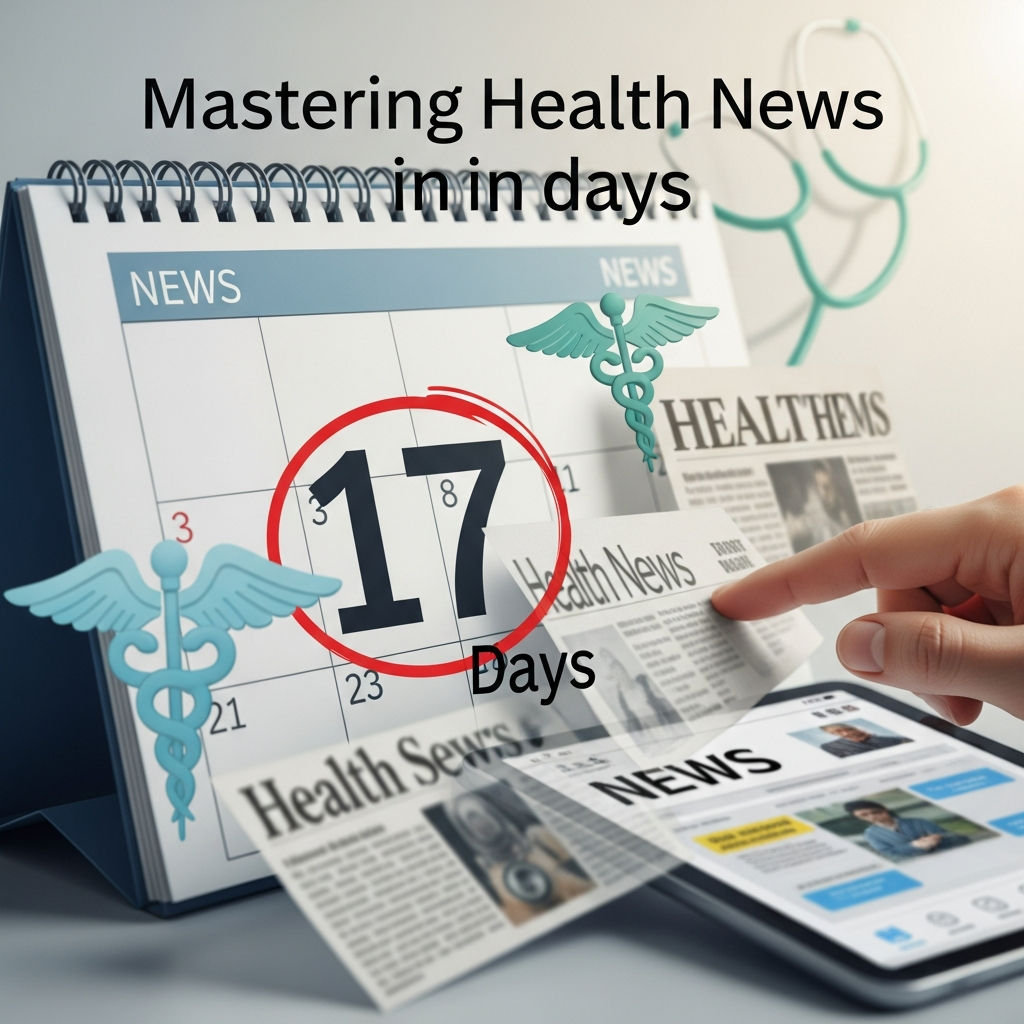
Mastering health news in 17 days isn’t just about being “smart” at dinner parties. It’s about agency. When you understand the nuances of medical reporting, you can have more productive conversations with your doctor. You can make informed choices about your diet, exercise, and medications without being swayed by the latest fad.
Summary Checklist for Mastering Health News:
- Always look for the primary source link.
- Check the hierarchy of evidence (Is it a human trial or a mouse study?).
- Identify the absolute risk to avoid being scared by percentages.
- Look for conflicts of interest and funding sources.
- Ignore sensationalist language and “miracle” claims.
By following this 17-day plan, you’ve moved from confusion to clarity. You are no longer a victim of the “outrage economy” that thrives on health fears. Instead, you are a savvy, informed individual capable of navigating the complex world of modern medicine with confidence.